Discover Palmer Lake
The Palmer Lake Historical Society is an organization that promotes, preserves, and protects the history of the Palmer Divide area of Colorado; and sponsors, maintains, and is responsible for the activities and commitments of the Lucretia Vaile Museum. These include historical objects and printed material pertaining to the Palmer Divide area that includes Palmer Lake, Monument, School District 38, the United States Air Force Academy, and as far east as Table Rock.
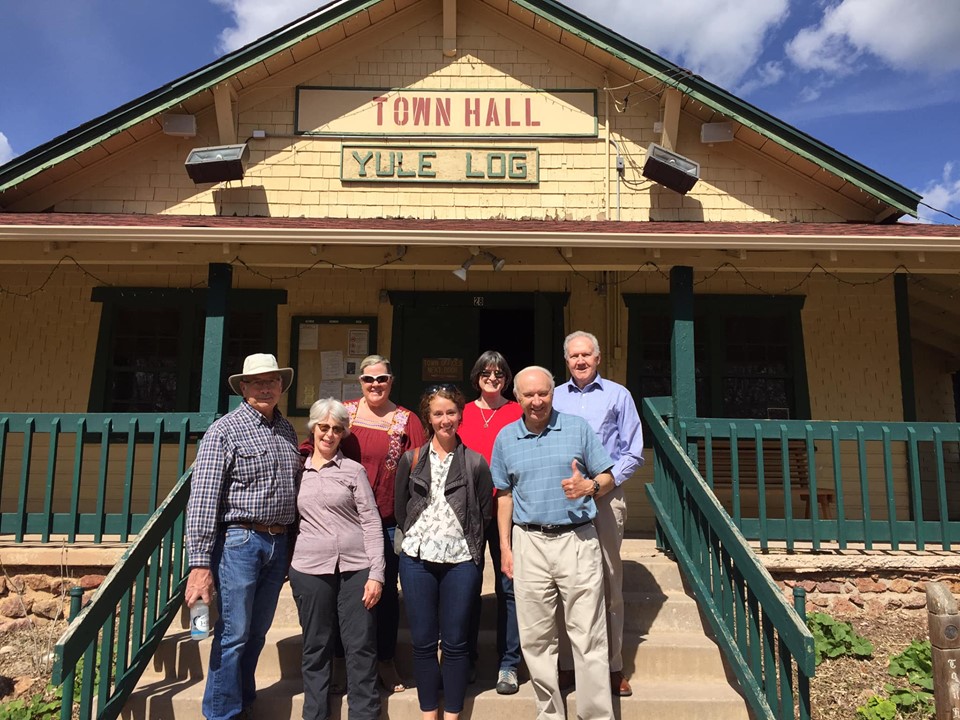
In 1964 the Palmer Lake Historical Society joined with the newly formed Pikes Peak Library District to establish a museum and library in the former Santa Fe Railroad Section Foreman’s house. The museum quickly outgrew that building, and the current Library-Museum was dedicated on October 4, 1981. An area furrier who was going out of business donated the glass display cases still used in the museum.
An addition was built in 1996 with money the Palmer Lake Historical Society received from the estate of Lena Royse, providing storage and administrative space. It now contains permanent exhibits dedicated to the towns of Palmer Lake, and Monument as well as the surrounding area. The rich history of the Tri-Lakes is now maintained as a legacy for those yet to come.
Upcoming Events
Rocky Mountain Chautauqua Assembly
The Palmer Lake Historical Society is proud to present the 2019 Return of the Rocky Mountain Chautauqua in our historic town of Palmer Lake, nestled at the foot of Rampart Range 20 miles north of Colorado Springs and four miles west of Monument.
The original Chautauqua Assembly came to Palmer Lake in 1886 and was an annual summer event for more than two decades. Palmer Lake hosted one of the first Chautauqua Assemblies in the Rocky Mountain West.
The purpose of the Chautauqua Assembly was to provide entertainment, education, inspiration and outdoor recreation to enrich people’s lives. The Chautauqua Movement flourished in the U.S. from 1874 into the 1920s. At its peak, over 400 locations around the country held an annual summer Chautauqua Assembly.
The Rocky Mountain Chautauqua Assembly made Palmer Lake a destination point for many. People from Colorado Springs and Denver, as well as elsewhere in Colorado and Midwestern states, arrived on the Denver & Rio Grande Railroad.
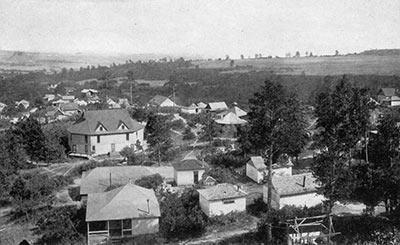
Palmer Lake’s Chautauqua took place in Glen Park centered around an auditorium built on what we now know as Chautauqua Avenue. Chautauqua activities included lectures, debates, concerts, campfire gatherings and burro excursions up to the reservoirs.
Many homes in “The Glen” neighborhood began as rustic tent cottages, where Chautauqua-goers stayed for the six-week long assembly. Several Chautauqua cottages eventually evolved into permanent homes where some descendants still live today.
Due to changing times, the Chautauqua eventually faded away by 1910. However, in August 2008, the Palmer Lake Historical Society sponsored a one-day event to revive the Chautauqua Assembly, followed in August 2009, by a three-date event, 2009 Return of the Rocky Mountain Chautauqua. This event included a Vaudeville show, dinner theater, old-fashioned baseball game, historical walk, nature walk, ice cream social, church service in the Pinecrest Church, Model A and T cars, box lunches and much more. The Chautauqua was also held in 2010 through 2015.
The 2019 Chautauqua will be held August 3, 2018 – 10:00AM to 3:00pm. History-related events this year will include portrayers of historic men and women who helped build Colorado, historic crafts, wildlife exhibits, and interactive activities for the entire family. So mark your calendars and get ready to enjoy history!
Lucretia Vaile Museum
Weekly Hours
Wed – 1PM to 3PM
Sat – 10AM to 2PM
June to August
Wed – 1PM to 4PM
Sat – 10AM to 2PM
Current Exhibits
100th Anniversary of Armistice Day
A WWI Exhibit Commemorating the 100th Anniversary of Armistice Day & the Treaty of Versailles
The Fighting Ended Nov. 11, 1918 at 11:00 AM.
The War Ended on June 28, 1919.
This exhibit showcases artwork, postcards, posters, magazines and more, ca 1918. You will see 100-year-old photographs, War Art, and artifacts brought back by returning soldiers and a Doughboy uniform. The war was known as the “War to End all Wars.” As is often the case, assumptions were in error. New technologies were to make war ever more deadly. The machine gun, airplane along with heavy, long-range artillery led to a year’s long stalemate featuring Trench Warfare, and No-Man’s Land where to cross, meant death was all but certain.
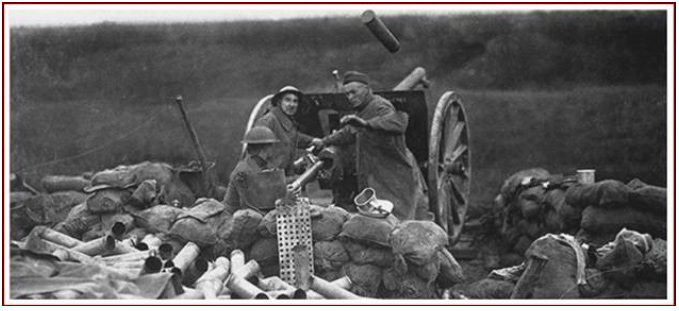
Did you know? In WW I 9 million combatants, and 7 million civilians were killed. Eight million Horses, Burros, Dogs and Donkeys were also killed in the “Great War.” Come and meet 2nd Lt., Rogers M. McDonough on his way to France in early 1918. Sgt. Allan Mark is featured with his Uniform, Gas Mask, Helmet and many other possessions and documents. Sgt. Mark was with the 4th Div. field artillery. He served in France and Germany. The type of cannon he crewed was a French 75mm, Mdl. 1897. (Example below) It was capable of firing 4 shells in 6 seconds! Note: the shell casing still in the air as another shell is about to be loaded!
Hear General Pershing put forth the need for war and listen to patriotic music recorded on 78 rpm records. Hear the last two minutes of the fighting and the silence that followed with a surprising revelation at the end. See the 75 mm cannon in action.
This Exhibit and Museum Admission are free and open to all.
WHEN: Through June 2019
WHERE: The Lucretia Vaile Museum, 66 Lower Glenway St, Palmer Lake, CO 80133.
HOURS: Wed. 1 PM ~ 3 PM, Wed. June ~ Aug. 1 PM ~ 4 PM, Saturdays year around: 10 AM ~ 2 PM
Who Was Lucretia?
 Lucretia Vaile’s name has been associated with Palmer Lake since the 1880’s when, as a small child, she came with her parents to spend the summers here. Eventually they built a summer home in Palmer Lake and in 1881 the Vaile family moved to Denver, Colorado. In 1952 Miss Vaile sold the rustic property and built a year round small house just below the first Vaile cottage. She then donated this home–known to her as “Cloudview”–to Palmer Lake in 1968 for use by the Little Art Group.
Today it is known as “The Vaile hill Art Gallery” in memory of the Vaile Family, Palmer Lake’s first summer residents. Miss Vaile was instrumental in starting the Yule Log Ceremony, was a founding member of the Colorado Mountain Club, a charter member of the Palmer Lake Historical Society, and was granted the “Governor’s Award” in 1974 for her outstanding community service in all fields. She died in California in 1977.
Throughout her lifetime she was interested in the cultural development of this mountain community. Her bequest to the town, along with additional funds from El Paso County, made it possible to build the Lucretia Vaile Library/Museum, a memorial of her contribution to the heritage of Palmer Lake.
Consider Joining Us
In 1956 a group of citizens recommended that a manuscript written by Marion Savage Sabin, detailing the founding of Palmer Lake, Monument, and the surrounding Tri-Lakes region, entitled “Palmer Lake, A Historical Narrative,” be published. To accomplish this, they also recommended that a Historical Society be formed to continue the preservation of the area’s history. The Palmer Lake Historical Society was subsequently founded by Marian McIntyre-McDonough and was incorporated with a full slate of officers and directors. Click on the brochure cover under the menu on the left to open the PLHS Brochure in .pdf format.
There are approximately 150 current members who support the Society through their dues ($15.00 individual or $20 family for a one-year membership; print out our Membership Form to join or renew your membership). Both the Palmer Lake Historical Society and the Lucretia Vaile Museum are non-profit.
The PLHS holds special occasion programs once a month which have included “An Evening with John Fielder,” famous Colorado Author/Photographer and “The Semi-Annual Tour of Estemere,” a magnificent Queen Anne Victorian home. Calendar of Events
Books
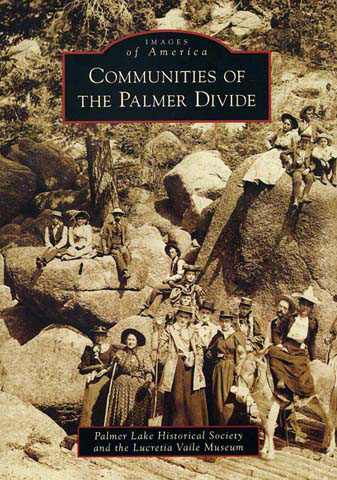
Communities of the Palmer Divide
Native American tribes once traversed the east-west anomaly of the Rocky Mountains known as the Palmer Divide as a passage between the high ranges and the Great Plains. Lying between Denver and Colorado Springs, and named for William Jackson Palmer, found of Colorado Springs, the offshoot range divides the great Platte and Arkansas River Systems. Settlers homesteaded, farmed and ranched the area. Railroad construction in the 1870s led to towns supporting commerce and tourism, particularly in the western section of the Palmer Divide, in what eventually became known as the Tri-Lakes Area. The area drew tourists who enjoyed hiking, wildflowers, and the outdoors, and facilitated such local industries as ice harvesting, lumber milling, ranching and potato farming. A vast area north of…
Videos
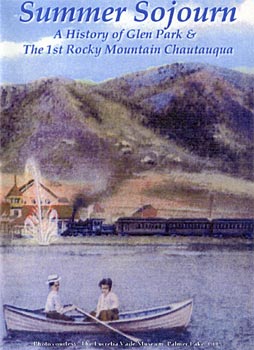
Summer Sojourn
Price: $25.00
Type: DVD
Created By: Jim Sawatzki, (Emmy Nominee)
Subject: Chautauqua, Glen Park, and Palmer Lake History
A History of Glen Park & the 1st Rocky Mountain Chautauqua which was held in Palmer Lake. Long before silent movies, radio, and television, over 45 million rural Americans relied on the Chautauqua stage for their cultural entertainments. President Theodore Roosevelt called the Chautauqua “America at its best.” The DVD includes another video “The Village on the Divide” a history of Palmer Lake, Colorado plus 30 minutes of bonus footage of Glen Park (The Glen) for a total running time of about 90 minutes. Produced by the Palmer Lake Historical Society.
Monuments
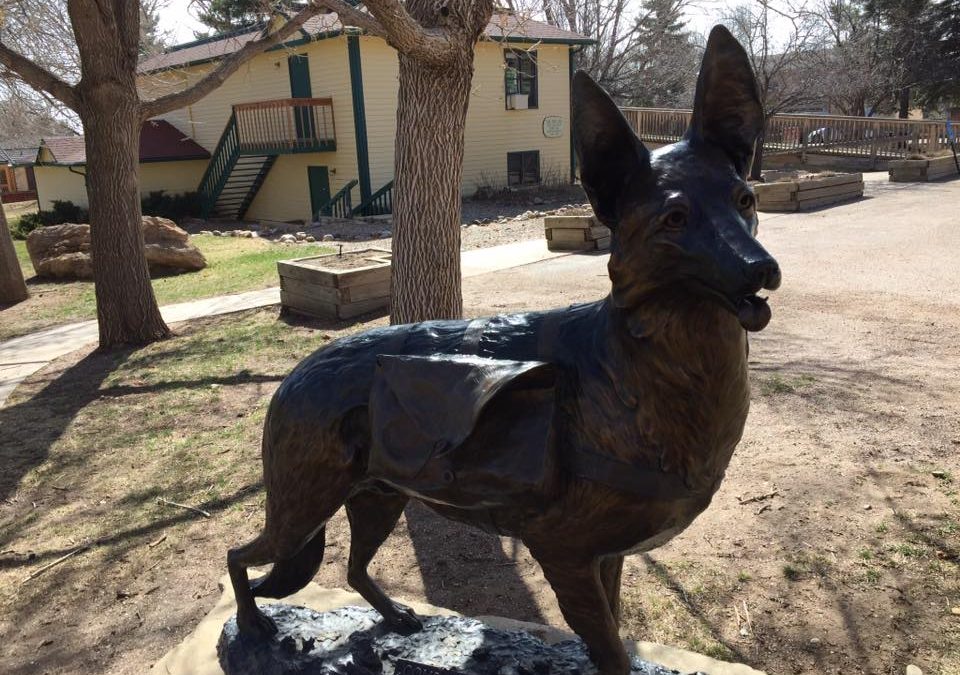
Come Dizzy
The bronze statue of Dizzy may be seen in the Village Green of Palmer Lake. Dizzy helped build the Star of Palmer Lake in 1935, during the Great Depression. Dizzy was presented as a gift to the people of Palmer Lake on October 21, 2006 to commemorate the Society's 50th anniversary. In keeping with our unofficial motto, "History Should Be More Than a Memory," Dizzy will be watching over the Star on Sundance Mountain for many years to come. Read the full story of the Star and Dizzy here: The Star of Palmer Lake